Friday, February 10, 2012

Electricity Rates to Increase 13% Nationwide


Preparing for the Smart Grid, renewable technologies

Electricity rate increases nationwide will range from 3 to 33% with the average at 12.64%. The statistics appear in the AEE 2012 Electricity Outlook prepared by Southern California Edison (http://goo.gl/uGmHD).

SCE reported the final decision on its 7.55% across-the-board rate increase request is due in March and would take effect in May. With approval, the increase will amount to $6.285 billion in added income. In the same report rates for PG&E were expected to rise 6.4%.

The report went on to detailed why SCE needs the funds. They included infrastructure replacement; operations and maintenance expense for capital-related projects, regulatory mandates, wildfire insureance and employee benefits; and Smart Grid enhancements. These include replacing poles, wires and transformers; increasing grid security; adding smart grid components need to integrate more renewable energy; getting the SCE region ready for plug-in electric vehicles; and maintaining a skilled work force.

Residential tiers at SCE would change as follows: Baseline (T1) from 12.5 to 13.1 cents per kilowatt-hour (kWh) or 5%; Tier 2 from 14.8 to 15.5 (5%); Tier 3 from 22.9 to 29.1 (27%); Tier 4 from 26.4 to 32.6 (23%) and Tier 5 from 29.9 to 36.1 (21%). CARE (discounted) customers will see a 14% increase in Tiers 3-5.

Steep as they are, these increases could be a lot worse. SCE serves some 13 million residential and commercial customers so the burden is spread around. SCE is not only the largest utility in California but it comprises 80% of the gross revenues of its parent, Edison International in New Jersey.

With most states adopting renewable energy standards, ratepayers will see increases related both to the increasing costs of fossil fuels but also in upgrading infrastructure for the Smart Grid and renewable energy technologies. As always, the best way to mitigate the rising costs or power to home and work is solar power. A PV system provides both clean energy for 30 years or more but hedges against future rate hikes during its lifecycle. 


allvoices

Tuesday, January 17, 2012

CA Farmers Drill Wells, Pump with Solar


Drill, baby, drill! Then go solar.... 

Sometimes solutions to problems are hidden in plain sight. Two avocado farmers in San Diego County experienced exactly that.

Their problems were two-fold: The skyrocketing cost of water for irrigation and the equally exploding costs to pump it. Their solution, tripped upon by sheer necessity, came by drilling for their own water, digging their own ponds to hold it and building solar power systems to pump it. Even better, a lot of the equipment and labor was already on hand.

Of course, drilling the wells and making the holding areas cost money but the medium- and long-term savings are considerable. What's more, water availability and the rising
cost for it is mitigated. Going solar however, required some outside expertise.

Enter Larry Slominski.

Slominski's been in solar since way before solar was cool. His first-hand experience ranges from installing off-grid PV systems in Micronesia while in the Peace Corps to a 2MW grid-tied installation at the Fresno-Yosemite International Airport.

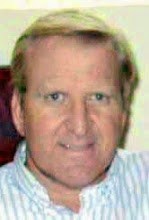
Larry Slominski
A mechanical engineer by training, Slominski has been involved with every facet of the solar industry including both crystalline and amorphous-silicon panel technologies; single- and dual-access trackers; concentrated PV; string and micro-inverters; and all forms of ballasted, BIPV and penetrating roof applications and ground-mounted projects. Walking with him at a solar trade show and seeing someone in every third booth hailing Larry like a long-lost army buddy, you know he is a maven of the solar field.

Slominski worked with the two farmers on practical panel array plans on the land made available. His services also included compliance, permitting, rebate and tax incentive advisement, equipment selection and procurement, project oversight, inspection preparation and system commissioning.

"Solar panel prices are at an all-time low and when you add incentives along with the high cost of energy and water, in these cases," says Slominski, "it's a great time to go solar." He said when on-staff farm labor is added to the mix, payback can come in less than five years. One of the two farmers, he says, will save a cool million by taking this new tack.

"Farmers know if they cannot control external market forces, they can  vastly improve their bottom line by drilling their own wells and utilizing solar power," Slominski concludes, "and these two alternatives have been there in plain sight for quite awhile."

For inquiries contact Larry Slominski at LTS Energy, 760/505-6822 (lslominski@aol.com) or David Brands, 760/908-3770 (dbrands72@gmail.com).


allvoices
 

web site visitor stats
DVD Rentals